
New
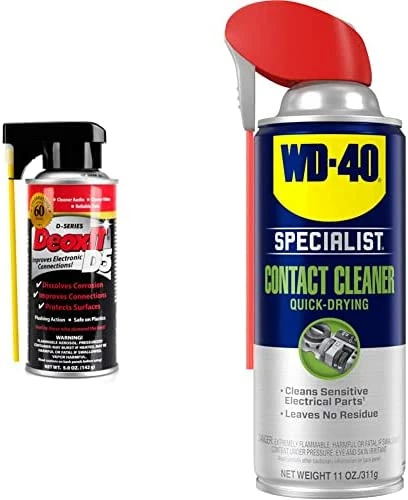
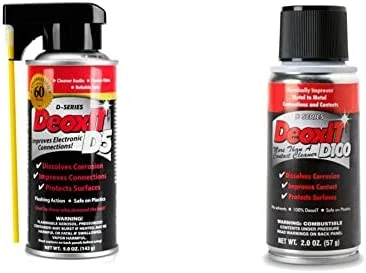
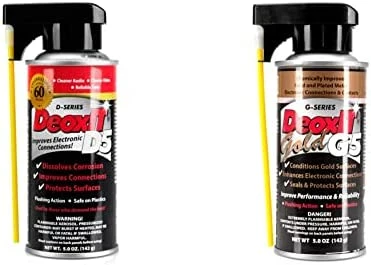
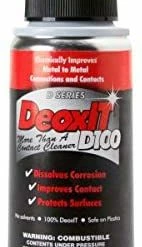
Original price was: $16.99.$11.89Current price is: $11.89.
- Safe Payments, the Smart Choice
- Shop with Confidence, Pay Safely
- Protecting Your Payment Information
- Quality products, fair prices.

- Surface Recommendation: Plastic, Metal
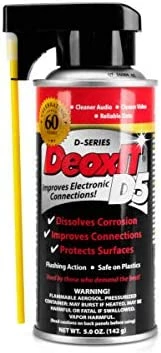
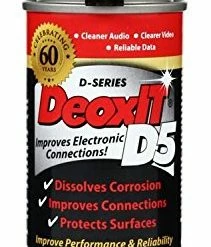
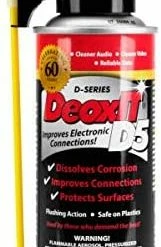
- Brand: HOSA
- Item Form: Aerosol
- Item Weight: 142 Grams
- Item Volume: 148 Milliliters
- Reduces intermittent connections, arcing, and RFI as well as wear and abrasion
- Safe for use on all metal connectors and contacts and will not harm plastics
- Dispensing Type: Spray
- Volume: 5 oz
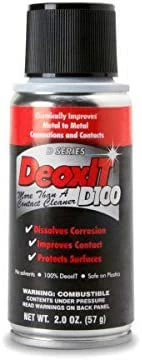
| Size | 2 oz., 5 oz. |
|---|---|
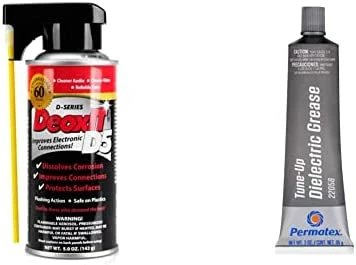
| style | Cleaner + Cleaner, 2 oz., Cleaner + Grease, 3 oz. Tube, Cleaner + Cleaner -11 Wt Oz, Cleaner + Cleaner. 11 oz., Cleaner, Cleaner + Enhancer |
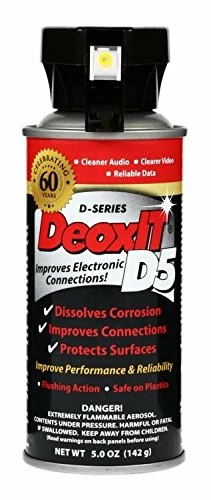
8 reviews for Best deal ⌛ Osa D5S-6 CAIG DeoxIT 5% Spray Contact Cleaner, 5 Oz 💯
Add a review
Related products
New
Original price was: $10.98.$7.69Current price is: $7.69.
New

Original price was: $15.99.$11.19Current price is: $11.19.
New
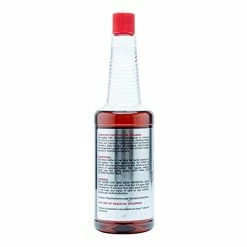
Cleaners
Cheapest 😀 Red Line 60103 Complete SI-1 Fuel System Cleaner, 15 Ounce, (15 Ounce, (Pack Of 2)) 🎁
Original price was: $26.99.$18.89Current price is: $18.89.
New
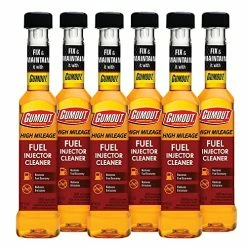

Original price was: $17.45.$12.22Current price is: $12.22.
New
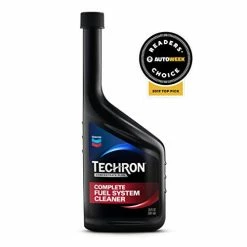
Original price was: $13.99.$9.79Current price is: $9.79.
New
Original price was: $5.99.$4.19Current price is: $4.19.
New
Original price was: $5.01.$3.51Current price is: $3.51.
New
Original price was: $9.99.$6.99Current price is: $6.99.
J-Sigmo –
I’ve used one form or another of this product since the mid ’70s and it’s fantastic.I’d found out about it from a magazine back then called Audio Amateur and at that time, the similar product was called Cramolin. As with DeoxIT, it came in a red and a blue variety. The blue is/was a preservative for newly manufactured contacts and the red is/was a cleaner and preservative. Theoretically, the blue may provide longer/better protection while the red is better for cleaning and restoring contacts which are already oxidized.You can clean contacts with the red, then remove it, then treat with the blue to get the best protection of already oxidized contacts, but in practice, the red alone works so well that it’s extremely effective to simply clean and treat the contacts in one step using only the red. As a result, I use about one can of blue for every ten or more cans of the red. For most uses, most folks only need the red (D) variety. I don’t want that to make it sound like I go through cans and cans of the stuff, but since I work in the electronics field, I do use a lot more than most people.As has been mentioned in several other reviews, you need very little of it to do most jobs. A single can will last a very long time even for someone who is constantly working on a lot of equipment.After finding out how well it worked on audio connections and potentiometers, I introduced the folks at the electronics company where I worked to it. All of the technicians and engineers were amazed and it soon became a staple. We designed, manufactured, installed, and serviced various telemetry and process control equipment. A lot of this gear as well as equipment made by others that we were called upon to service was in areas with corrosive atmospheres like oilfield, refinery, water/wastewater treatment, laboratory, and other locations where hydrogen sulfide, chlorine, hydrochloric acid fumes, etc., are present, leading to lots of contact-related problems.It’s been extremely effective over these many years, and although the name and formula has changed since the “Cramolin” days, the new stuff seems to still be very good.I’ve also used it on very high voltage connectors and one of the amazing properties of it is that while it improves contact integrity and lowers contact resistance dramatically, it does not break down and cause leakage or flashover when used on high voltage systems. I’ve used it for years on photomultiplier tube and Geiger tube devices (radiation survey and monitoring equipment), and never had any problems with it. These systems usually operate with bias voltages between 900 and 1500 Volts, but sometimes run up to 2500V.A fantastic example of how it works was something we did many years ago where we had a batch of very old thermal self-resetting circuit breaker devices in a system. The problem was that they had silver contacts. Silver itself is the best conductor of all elements, but it is very reactive and oxidizes (tarnishes) very easily. These devices were sealed and “non-repairable”. But their contact resistance was unacceptably high.I mixed a solution of Cramolin Red and a solvent (probably Freon TF back in those days), put it in a glass jar, and simply dropped these breakers into it and kept them submerged until the bubbles stopped coming out to make sure they were totally flooded with the solution. We then took them out, letting the fluid run back out of them, and then rapped them on a desk a dozen times or so to make the contacts inside “jiggle” a bit. That was enough to let the Cramolin work its way between the closed contacts.Measuring a number of these breakers before and after the treatment, the resistances started out between 100 and 200 milliohms. After treating them, the typical resistance went down to around 6 milliohms! The high current and low voltage these devices needed to carry meant that the voltage drops across them had been unacceptably high, but post-treatment, they operated beautifully. And stayed that way for years.Various other contacts which would heat up and cause other problems prior to treatment operated cool and with extremely low voltage drops after treatment.I’ve personally “repaired” countless potentiometers, switches, and various connectors over the years with this stuff.We call it “Technician in a Can”, and it lives up to that name. I pre-treat a LOT of contacts prior to crimping them onto their wires, and it lowers the mating forces and improves the reliability of virtually any connector.It truly is special stuff. It’s indispensable for technicians, manufacturers, audiophiles, etc. If I had a 55 gallon drum of it, I could take entire pre-amps and other audio gear and dunk it to fix all of the bad switch contacts and pots in one quick operation. :)The only thing that’s a minor issue is that as with any contact cleaner that has (or is nothing but) a solvent, it will flush away the viscous goo that’s often used to make a potentiometer have a “silky” feel to it when rotating. So when you’re treating a pot, it’s best to try not to allow any to get to the shaft/bushing part of the pot if you want to preserve the grease that’s in that annulus.But it often totally fixes a “scratchy” pot by simply getting it on the resistive pad and then running the pot back and forth a dozen times or so.As with so many things, for some reason, manufacturers just love to make pot wipers with silver plating. Bad idea! But all too common. Once that wiper tarnishes, the pot will sound awful since silver oxide is an insulator. The DeoxIT usually allows that oxide layer to be removed by simply rotating the pot a dozen times or so, and then it coats the wiper and the resistive element, preventing future problems and leaving the pot working/sounding excellent.Anyhow, all I can say is that this product has served me extremely well for nearly 40 years, and I highly recommend it.
Andrew –
Purchased this product after seeing some YouTube videos touting it as a fix for scratchy pots and whatnot. I used it on some old vintage guitars I was working on and it did just that. Pots have been working great, smooth as butter and no noise. I don’t have the adapter that StewMac sells but I’ll probably get that eventually. Can’t recommend this stuff enough if you need it.
A Ekland –
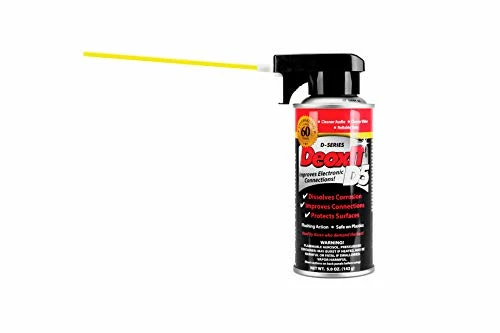
So I have a Roland Guitar synth that had a darn dirty connector. This Hosa D5S-6 CAIG DeoxIT is so easy, just stick the straw into each hole of your connector and just a quick squirt does it. It will get wet, and what i do is just shake the cable end off into a paper towel. it’s not water based so corrosion will not happen as a result of liberal usage. Also depending on how corroded your contacts are, you may need to push/pull your connectors in and out a few times then shake that thing off into a paper towel again and repeat until clean. Thank god for Hosa D5S-6 CAIG DeoxIT !
tammy –
Used primarily on dirty contacts and potentiometers of test equipment. Usually works first time although if really oxidized may take a couple of passes.
Matt –
This stuff is almost magical. I have a 1980’s vintage Casiotone CT-360 keyboard that had a bit of corrosion on the potentiometers for the master volume and accompaniment volume controls that caused audible scratches and pops whenever I would adjust the volume while playing music. I sprayed a small amount of DeoxIT in the potentiometers, wiggled the sliders back and forth a few times, and the scratches and pops are completely gone now. The product easily exceeded my expectations. Worth every penny.
Rockster –
It works as described. Cleaned the volume knob on my Marshall JCM900.
John –
This is by far the best electric contact spray, don’t use any substitutes .
J. Owens –
This is the best when it comes to pot lubrication. Quick shot of this and no more noise whatsoever. Done deal. (Enough in this can to last a lifetime.)