
New
Original price was: $15.48.$10.84Current price is: $10.84.
- Safe Payments, the Smart Choice
- Shop with Confidence, Pay Safely
- Protecting Your Payment Information
- Quality products, fair prices.

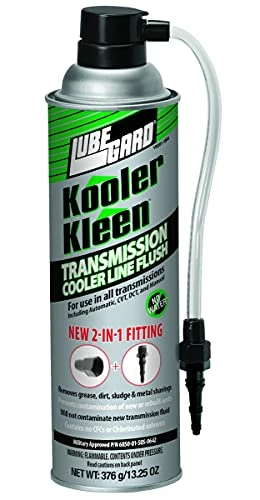
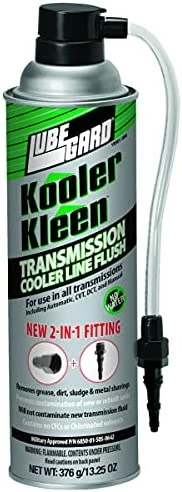
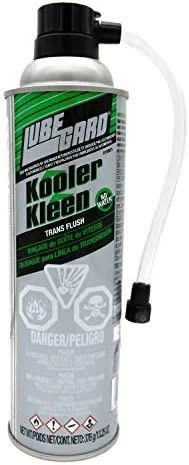
LUBEGARD Kooler Kleen Trans Cooler Flush uses a proprietary mix of detergents to safely clean transmission cooler and cooler lines in automatic, CVT, DCT and manual transmissions. As recommended by OEMs, transmission fluid cooler lines MUST BE flushed to prevent pollutants such as friction materials and metal debris from entering newly installed transmissions. Kooler Kleen safely removes these pollutants from the transmission cooler and lines without use of water-based detergent that could be harmful to transmissions and seals.
- For use in all transmissions including automatic, CVT, DCT and manual transmissions
- Removes grease, dirt, sludge and metal shavings
- Prevents new or rebuilt transmissions from pollutants
- Will not pollute new transmission fluid
- Contains no CFCs or Chlorinated solvents
| Style | Dual Tip, Single Tip |
|---|
7 reviews for New 🎁 Lubegard 19001-UNV Kooler Kleen Transmission Cooler Flush With 2-in-1 Fitting, 13.25 Oz 🎉
Add a review
Related products
New

Original price was: $27.90.$19.53Current price is: $19.53.
New
Original price was: $6.42.$4.49Current price is: $4.49.
New
Original price was: $19.99.$13.99Current price is: $13.99.
New
Original price was: $26.89.$18.82Current price is: $18.82.
New
Original price was: $4.28.$3.00Current price is: $3.00.
New
Flushes
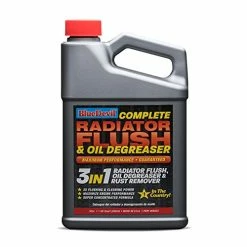
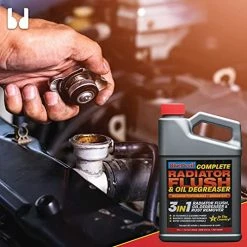
Coupon 🛒 BlueDevil Products BlueDevil 00203 Radiator Flush & Oil Degreaser – 32 Ounce,Gray ✔️
Original price was: $16.18.$11.33Current price is: $11.33.
New
Original price was: $114.75.$97.00Current price is: $97.00.
New
Original price was: $18.78.$13.15Current price is: $13.15.
Kazwinski –
I was very disappointed on several points with this product. This review is a little long, but that’s because of the level of frustration it has caused, and I hope to help prevent someone else from wasting their time and money with this product. First, the plastic connection fitting, if you can call it that, at the end of the very short plastic tube, fits virtually nothing that is generally used as fittings on transmission coolers. It is a female-type fitting, and most coolers already have female inlet ports, so a union of some type is required. This usually equates to a leak point to preserve pressure and fluid unless some type of sealant is used. I had to jury-rig a brass nipple to another piece of tubing to connect it, and it leaked of course, so getting this product to work halfway correctly took a lot of extra time, which I view as unnecessary if the product had been designed correctly. Second, the outlets for the solvent on both the cap and fitting were very small, so pressure was limited, and solvent flow was very weak. Not much of a flush action can occur this way. Third, the solvent itself seemed to be some type of weak safety solvent that did not exhibit much cleaning action. Kerosene would have been much better, which is what I used with an air flush afterwards with much better results, after I was so disappointed with this product. Lastly, the directions say to turn the can inverted for an “air” flush, after using the solvent. There was barely enough pressure to push the solvent out let alone have enough left over for an air flush. While relatively inexpensive price-wise, this experiment was very expensive time -wise. I chose this method of flushing a cooler as I was “in the field”, away from a shop environment, and thought it would save time. Unfortunately it was the opposite. I hate wasting time or money, and this was a waste of both. Lesson learned for me, and I hope others; this product is a joke. My advice to others: devise some other flush method or replace your cooler, but stay away from this gimmick. It is not a shortcut and you pay for what you get.
wireguy –
My cooling system was plugged as I discovered while using this product. It maintained the pressure on the line and I was able to find the block point and break it loose. I used two cans and flushed both directions back and forth until the lines flowed freely. Compressed air through the cooling system after the flush showed the lines were flowing well. The fitting on the end of the hose is 1/4 pipe female and screwed directly onto my line fittings. If your fittings are other than 1/4 pipe you will have to figure out a connection method. A piece of (probably 3/8) fuel hose clamped to your line with a MALE push in 1/4 pipe fitting clamped on the other end would work nicely if that would fit.
H. Limmer –
Disconnected cooler lines from transmission (GM 6L80 in fullsize pickup). First blew out all fluid with shop air. I used a length of clear, plastic tubing to go between the cooler line and my drain pan. The fluid came out the same darkened red color as what came out of the pan but nothing too dark nor at all thick, just “normal” fluid. I continued blowing shop air through the factory coolers (one in radiator and one in front of the radiator) and alternated from one line to the other a few times. Then I cut the little adapter off the end of the clear, plastic tube attached to the can of Kooler Kleen. The tube fit INSIDE the cooler line fairly tight. I started to send the Kooler Kleen into the line and thought not much was happening. I kept going and in a few seconds saw some darkish fluid coming out of the other line. Then it turned very, very dark and appeared very sludge-like for a few seconds. After this blast of dark sludge, the fluid coming out started to get more and more clear. I put maybe 2/3 of the can through one way and then reversed for the remaining 1/3. I finished by blowing shop air through the lines for at least 30 seconds in each direction and did this at least 3 times in each direction. I think the blast of very dark, sludge-like material that I saw coming out through the clear tubing is proof that this product did dislodge and flush out accumulated material. I feel confident in saying that all that sludge-like material can’t help the function of the cooler. I can’t say for certain that I improved cooling effectiveness but I feel better getting that junk out of the lines and coolers even if it makes no difference. I also like the idea of getting that much more brand new fluid into the transmission so that I’m that much closer to a 100% fluid change. Every little bit helps. I plan to use Kooler Kleen every time I change the transmission fluid in all my vehicles. It’s not hard to use and doesn’t cost much. Again, cleaner lines and coolers can’t hurt performance and just might improve it enough to keep the fluid a little cooler which only helps extend fluid and transmission life.
Jay11 –
WATCH THE VIDEO !!I did mine on my lift – but easy on the floor too !!I got a transmission rebuilt in my 2003 Silverado 4l60e 2wd.. put the transmission in, and before I connected the cooler lines, I followed the instructions on the can and went both ways with it as it says in the instructions and on the video..Works EXCELLENT !Only difference, I shot air from my compressor in the lines as well after cleaner was used.. cleaned out the rest of the residual left over chemical..Cleans it right out..added fresh new ATF fluid after cleaning process..Couldn’t be more happy 👍🏼I also used about 5’ of clear low pressure fuel line over the cooling lines directed into trash can to avoid a mess..Plan ahead before you pull the trigger, or you’ll get it in the face !
Courtney Carlson –
Works well for cleaning coolers out.. wish it had adapters for the hose but otherwise good product
ADAM BEDDINGFIELD –
This product did the job on my 2005 Chevrolet Suburban. I used two cans to flush the cooler.
Jacob –
Item seemed to have worked great for cleaning out my transmission cooler