
New
Original price was: $22.91.$16.04Current price is: $16.04.
- Safe Payments, the Smart Choice
- Shop with Confidence, Pay Safely
- Protecting Your Payment Information
- Quality products, fair prices.

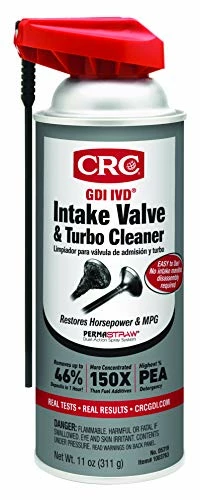
Applications: Air intake valves on GDI or standard fuel injected engines; Delivers concentrated advanced Cozol technology directly to the backs of intake valves. Dissolves baked-on carbon deposits, improves MPG, increases power and reduces rough idle. Effective for use on GDI and standard PFI engines.
- Proven to clean intake valves on GDI engines and turbo systems
- Easily installed through the air intake system
- Highest concentration PEA (Polyether Amine) detergency available
- Proven to remove up to 46% of GDI Intake Valve deposits in 1 hour
- 150X more concentrated than fuel additives
7 reviews for Top 10 😉 CRC GDI IVD Intake Valve & Turbo Cleaner 😀
Add a review
Related products
New

Original price was: $23.99.$16.79Current price is: $16.79.
New

Original price was: $6.86.$4.80Current price is: $4.80.
New
Original price was: $28.95.$20.27Current price is: $20.27.
New
Original price was: $6.29.$4.40Current price is: $4.40.
New
Original price was: $33.42.$23.39Current price is: $23.39.
New
Original price was: $4.93.$3.45Current price is: $3.45.
New
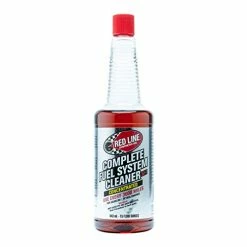
Cleaners
Cheapest 😀 Red Line 60103 Complete SI-1 Fuel System Cleaner, 15 Ounce, (15 Ounce, (Pack Of 2)) 🎁
Original price was: $26.99.$18.89Current price is: $18.89.
New
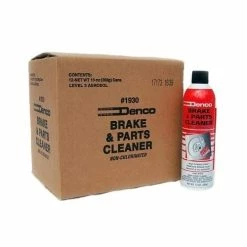
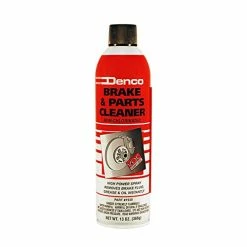
Cleaners
Deals 😍 Enco #1930 Brake & Parts Cleaner – 15.3 FL OZ – 13 OZ Net Wt – 12 To 88 Pack (12) 😀
Original price was: $39.99.$27.99Current price is: $27.99.
Doggie Bear –
I did two successive treatments at about 1,000 miles apart, then I changed the oil. Just before I changed the oil, I sent an oil sample to Blackstone Labs for analysis. No engine damage was detected in the analysis (see report in photo).I’m docking one star off this product because it’s a bit scary to use. The first time I used it: the engine knocked, pinged, misfired, and the check engine light came on during the test drive. The light turned itself off after a few restarts and 50 miles of driving. The second time I used the product, when the engine knocked, pinged, and misfired, I pulled over to the side of the road, put the car in park (or neutral), and revved the engine a few times (not exceeding 3,500 rpm per instruction). This cleared out the excess (lots of smoke came out the tailpipe) and I did not get a check engine light.To keep the engine at 2,000 rpm while spraying, I built a rig using Reach ‘n Spray and some bicycle brake parts (see photo). That way I can spray and sit in the driver’s seat. Originally, I used a fuel line to extend the straw to the vacuum port (see photo), but the Technical Support Staff at CRC advised me to spray directly else the solution may not atomize properly which may lead to engine or catalytic converter damage.Here’s the instruction:1. Warm up the engine2. Spray in 1-second bursts and 1-second rests while keeping RPM at 2,000 until can is empty3. Rev engine 3 times not exceeding 3,500 RPM, then idle for 1 minute4. Shut engine off and wait 1 hour5. Start engine, rev engine a few times not exceeding 3,500 RPM to clear out excess, and drive at highway speed for at least 10 minutes. (If the engine runs rough, pull to the side of the road, put the transmission in park or neutral, and rev engine a few times (do not exceed 3,500 rpm per instruction) until no more smoke comes out of tailpipe, then continue driving at highway speed.) If your engine continues to run rough, repeat the above procedure to clear out the excess solution. Do not put a heavy load on your engine or drive at highway speed until the knocks, pings, and misfires are gone (you may damage your engine).I sprayed through a vacuum port closest to the throttle body. By spraying through that vacuum port, I keep the spray atomized and avoid accidentally spraying the MAF sensor. Do not spray the MAF sensor as this could trigger a check engine light or damage the MAF.Here’s my understanding: CRC GDI IVD Cleaner uses polyether amine (PEA) as detergent. This detergent needs a heat soak to help emulsify with the carbon. Then when heated the emulsion vaporizes and goes into the cylinder and out the exhaust. The cleaning process is slow: if you have 100,000 miles on your engine the average amount of carbon removed from your valve is about 10-20%.I plan to do this cleaning procedure before every oil change.NOTE Lexus IS250: For better distribution of cleaning solution to all cylinders, use the EVAP port or the PCV port on the air surge tank (upper intake manifold) to shoot in your cleaner (see Photo with ports labeled). The Toyota ACIS (Acoustic Control Induction System) divides the air intake into upper and lower paths. You want to shoot the cleaning solution before the divide. Only the EVAP and PCV ports are before the divide. All other ports connect to the upper path, so the lower path is not cleaned. When spraying into the EVAP port, temporarily use a 5/16 inch diameter hose to bridge from the EVAP VSV to the UNUSED vacuum port (see photo).WARNING: You can damage the engine if it hydrolocks. Be sure to maintain 2,000 RPM and spray in short bursts. For added safety, you can rev the engine 2-3 times every 30 to 45 seconds to prevent puddling of the cleaning solution in the intake tract. The EVAP (PURGE) or PCV ports are the recommended ports to use (other ports may not distribute the solution properly causing engine or catalytic converter damage).
Lmitch –
My 2017 Honda Accord was chugging badly whenever I tried to pass or went past half way on the throttle. It only had 8k miles on it so I tried everything else first -new air filter, gas treatment – to no avail. I bought can of this and sprayed it thru the intake just past the MAF sensor. Worked good – no more chugging whenever I stepped on the throttle. 6 months later it started doing the same thing and gradually got worse. At 8 months it was horrible – I had to make sure I had plenty of room to pass since it would chug so bad whenever I floored it. This time whenever I ran a can thru it and started the 10 minute highway drive it scared me. As soon as I got on the road and stepped on the accelerator the car choked down and nearly stalled, then it sputtered and a HUGE cloud of smoke exited the rear of the car. The car then picked up and accelerated normally, but my check engine, low tire, and power steering warning lights lit up. The car ran fine however so I continued with my 10 minute drive and by the time I got home it was running like a top – flooring it would immediately push me back in my seat like it should. Got home and disconnected the negative side of the battery for a few seconds and all warning lights disappeared. It has been a week now and it is still running like new. I figured that there was a large amount of carbon that broke loose and hit the combustion chamber causing the huge smoke cloud which messed with the sensors in the catalytic converter and set off the codes. I’m going to get a oil catch can and start using this every 3000 miles or 6 months so I wont have such a build up again. Much cheaper than the $150 my local Honda dealer wanted to clean it out.
Kevin –
I use this product every 10,000 miles. After applying it, the engine runs much smoother. I can only assume this is the direct result of clean valves.The CDC Valve and Turbo Cleaner is made from the same detergents found in gasoline. In a low pressure fuel injected car, gasoline goes over the valves. High quality gasoline includes detergents to keep the engine clean. Direct Injected cars / trucks put the fuel directly into the cylinder. This means the valves are not cleaned by the detergents in the gasoline. CDC Valve and Turbo Cleaner (V&TC) solves the problem.The first time I applied the product (V&TC), I saw gunk on the rear of my car. This presumably came from the valves. The next time I applied the product, I did not notice the gunk on my car. To me, this is an indication V&TC is working.The first two times, I disassembled the intake to spray V&TC into the intake. The third time, I found a vacuum line (brake booster) and applied the product to the vacuum line. Applying though the vacuum line is the easiest way to spray the product into the upper engine. However, this means only the exhaust side of the turbo is cleaned.I have not removed the intake manifold and used a borescope to inspect the valves. That’s a bit more than I want to do. I judge the product on the way my car runs. Based on this, CRC Valve and Turbo Cleaner does its job.
Retro Ron –
You can feel the difference. It feels a little rough on the car when you take it out for the “10 min spirited drive”. You will see smoke out of the exhaust during the drive, then it clears up and the car starts to get more hrspwrs. But seriously its a good product and it works.
Justin –
I would highly recommend this product to anyone with a GDI engine.
hung t pham –
I like the product very much.thanks
Mike Shuler –
Have used this cleaner every 5000 on my wife’s KIA sportage easy to use great results.