





Original price was: $29.99.$20.99Current price is: $20.99.
- Safe Payments, the Smart Choice
- Shop with Confidence, Pay Safely
- Protecting Your Payment Information
- Quality products, fair prices.

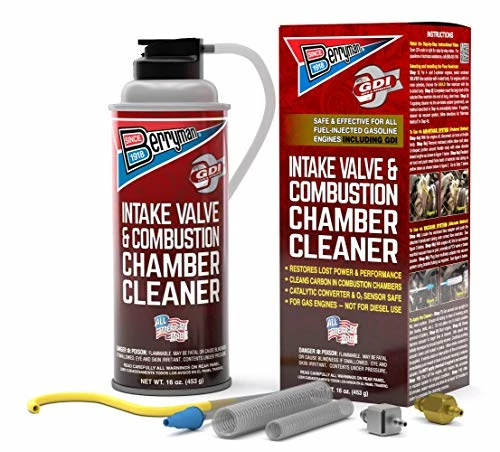
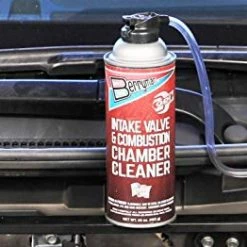
Berryman Intake Valve & Combustion Cleaner is professionally formulated for use in all fuel-injected gasoline engines. Contains polyetheramine (“PEA”) to clean combustion chambers and ALL types of intake valves including those in PFI, TBI, and GDI engines. Dissolves stubborn carbon buildup for a dramatic increase in performance and overall drivability. Restores original octane requirements. Includes universal application accessories. Safe on catalytic converters and oxygen sensors. Not for use in diesel engines.
- Formulated for Use In All Fuel-Injected Gasoline Engines, Including GDI
- Contains Polyetheramine (“PEA”) to Dissolve Carbon Buildup in Combustion Chambers
- Cleans ALL Types of Intake Valves, Including Those Found in PFI, TBI, and GDI Engines
- Safe On Catalytic Converters and Oxygen Sensors
- Not For Use In Diesel Engines
5 reviews for Cheapest ⌛ Berryman 2611 Intake Valve And Combustion Chamber Cleaner, 16-Ounce Aerosol ⭐
Add a review
Related products
Heavy Duty Oils & Fluids
Hot Sale 😉 ACDelco 1152615 GM Original Equipment 10-5055 Gear Marking Compound – 1 Oz ⌛

Heavy Duty Oils & Fluids
Heavy Duty Oils & Fluids
Discount 💯 ONAX 543200-755 Engine Degreaser And Cleaner-16.9 Fl. Oz 🔥
Heavy Duty Oils & Fluids

Heavy Duty Oils & Fluids

Heavy Duty Oils & Fluids
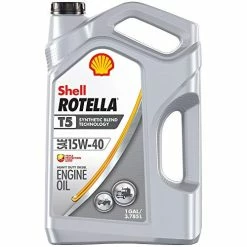
Best reviews of 🎉 T5 Synthetic Blend 15W-40 Diesel Engine Oil (1 Gallon, Case Of 3) 🔔

Heavy Duty Oils & Fluids

Heavy Duty Oils & Fluids
Brand new 🤩 Ferrari Maserati Washington 2 Cans Of BG EPR Engine Performance Restoration 🔔
Geek On The Hill –
I would have given this five stars except that there was a leak in the clear plastic hose where it was kinked rather than being gently folded over itself. It wasn’t a big deal — I just cut the hose at the leak and re-attached the fitting — but it could have been had it gotten into my eyes.In fairness, I should mention that I’ve never had this happen before. But it was concerning enough that I thought I should mention it, along with a warning to inspect the holes before pressurizing it and immediately upon pressurizing it. If there’s a leak, then shut off the valve. The solvent is very strong and could do some damage to an eye.That singular flaw aside, this cleaner works as well as any other I’ve used. I use it to keep carbon buildup to a minimum on the intake valves and in the combustion chamber of my car’s GDI engine.Because the fuel never actually touches the faces of the valves in a GDI engine, you don’t get any “fuel wash” effect of the valves; so using a product like this periodically is essential maintenance. It also helps remove carbon buildup around the rings; but the valves are the main targets for products like this.What I like about this particular product is that it can be used without a helper. It’s formulated to work with the car running at normal idle speed; it comes with fittings to attach the hose to the engine so you don’t have to hold it in place; and the can has a total-release valve that you just have to press down once. The chemical keeps flowing into the intake until the can is empty.In other words, once you attach the hose to the car and depress the actuator, all you have to do is watch it so you can shut down the engine when it’s empty. You don’t have to hold anything in place or keep holding the actuator down while a helper in the car keeps the RPM’s up. You just start the flow and monitor it.I also suspect that the sustained, slow flow does a better job of cleaning than a shorter application. I have no proof of that, however. It just seems sensible that a longer exposure time would work better.If you start using this product when your car is new, you have a good chance of never needing a more-expensive mechanical cleaning or walnut shell cleaning of the valves because you won’t give the deposits a chance to build up to the point that they affect performance. If you wait until the deposits are heavy, then this cleaner is still worth trying; but the heavier the deposits, the harder it is for a chemical cleaning to remove them. Better to start early.
Keeley Oot –
I used this on my 2019 Chevrolet Silverado 1500 with the 5.3L flex motor. I have noticed that my gas mileage went from 18.1 to 20.1 on my dashboard display. Follow the instructions and it’s simple. After you wait the 30 min and go for a drive, I recommend revving the engine for a few seconds before you attempt to drive. It may blow smoke, spit and sputter but it will stop shortly after. I didn’t and it was interesting to have that all happen while driving. Also my check engine light came on but after driving for about 5 minutes everything returned to normal. I’m sure that’s exactly why the instructions say to drive it for 10 minutes after. I hope this helps.
Kalei Andrew Chandler –
I have used this stuff in every LS based Chevy V8 (99 – 13 truck and SUV and 97 – 13 car) I have ever owned, and it will be rough as you do it, and for a few miles after, but it will blow out all sorts of carbon and sludge deposits on your valves, combustion chamber, pistons, and heads. It is quite noticeable on engines that have high mileage. The throttle body method is what they prefer you to do, but I feel like the pcv method gets it better, and if you are doing this then you should do a bottle of B12 in the tank and the spray bottle on the throttle body anyway. Biggest noticeable improvement I had was years ago on a 99 GMC 1500 5.3 lm7, and it suddenly started getting better mileage and smoother idle. On the more recent one’s like my 2012 Suburban 5.3 lc9 it improved it, but a 2012 is quieter, has vvt, and maybe the aluminum block doesn’t hold as much junk as the iron ones.
Matthew Lee –
Fast shipping from the friendly seller.Easy to use with the several adapters they send with the can.Rather effective product, cleaning out a good bit of carbon cleanup on my 2015 GTI.Obviously didn’t polish everything like a intake valve blasting service would but it’s not meant to do that, only be a nice preventative and economic cleaner.If using on VAG vehicles expect there to be a decent amount of smoke coming from the exhaust while in use and the first 10 minutes of driving around, that is perfectly fine.
Dax Rosenbalm –
This is my first amazon review and i am only writing it because this turned on my 2022 Kia Carnival’s check engine light. So if you have a scan tool capable of clearing your vehicle trouble codes dont worry, but if you don’t the parts store will refuse to do it, and i can imagine if I were to bring in my brand new kia with 10k miles on it to the dealership and tell them I used a valve cleaner on it. Maybe nothing, maybe them trying to “void my warranty” ?? It was a random cylinder misfire code that I just reset at home but I have a scan tool and im not too worried that this product would actually harm anything. Does it work? I dont know I didn’t look into the intake ports on my basically brand new GDI kia to tell how much if any carbon was there and I have no way of knowing what the piston rings look like without removing them from the block. Would I continue to use this to keep the carbon from building up on my GDI kia, Absolutely! I believe this works, i’ve seen evidence on YouTube thatleads me to believe it does something to clean up the nasty places that can develop. I know that carbon buildup can cause failures, and problems that I dont want. Im only giving it 4 stars because of the CEL and im only writing this review because I feel like people need a heads up. Should you buy this for your direct injection engine? Well it’s super easy to use, watch the manufacturer instructional video on YouTube (search the product) and you are ready to go. It’s kinda pricey but the ease of use makes it worth it. If it’s an ounce of prevention, it is better than a pound of cure. I preformed this before an oil change at 10k miles and plan on preforming the service every 10k miles and am hoping for the best as we plan on keeping the Carnival for 10 years or so. Cheers!